About the Author
Winfried Schwamborn became known in 1972 with the "Handbook for Conscientious Objectors" and shaped the gay movement as editor of "The Gay Book: Loving, Fighting, Living". After 30 years as a television journalist, he has been gaining experience in online retail since 2004. His current project is KUNSTWERK BILDER – a shop for gay art that shows what art history has left out.
Young and inexperienced, at a time when gay men were still disparagingly called "poofs" and "on the other side of the fence," I stumbled into a heterosexual marriage. Like so many men who later called themselves bi but had really just always been gay. After several years of marriage with quite good sex (I didn't know the "other side of the fence" yet), I had experiences that showed me: gay sex was better for me than anything I had found good before.
The natural progression was my coming out.
And when I had to reorganize my life amid social resistance, I heard a band on a film shoot in London that was completely unknown in Germany: the Tom Robinson Band. Their song “Glad to Be Gay” became my anthem.
Tom Robinson – Punk, Politics and Pride
Tom Robinson was one of the first openly bisexual musicians in late-1970s British punk and new wave. With the Tom Robinson Band (TRB), he released "Glad to Be Gay" in 1978 — a bold, angry response to police violence, discrimination, and social hypocrisy. The song was part of the Rock Against Racism movement and became the anthem of a generation of gay men who no longer wanted to hide.
Robinson did not sing about shame or apology. He sang about pride—in the midst of a time when homosexuality was still criminalized in many countries, when police raids on gay bars were an everyday occurrence, when the tabloid press portrayed gay men as a threat.
“Sing if you're glad to be gay” – The first verse
"The British Police are the best in the world
I don't believe one of these stories I've heard
'Bout them raiding our pubs for no reason at all
Lining the customers up by the wall
Picking out people and knocking them down
Resisting arrest as they're kicked on the ground
Sing if you're glad to be gay
Sing if you're happy that way"
"The British police are the best in the world
I don't believe any of the stories I've heard
That they storm our pubs for no reason
Line up the guests against the wall
Drag people out and beat them up
Resisting arrest while being kicked on the ground
Sing if you're happy to be gay
Sing if you're happy to be that way"
Then and now
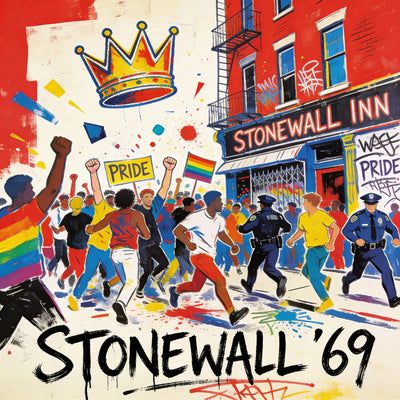
In 1978, police raids on gay bars in the United Kingdom were a reality. Gay men were arrested, beaten, humiliated – often without charge. The song denounced this violence with biting irony.
Today? In many countries around the world—from Uganda and Russia to parts of the USA—LGBTQ+ people are still persecuted, arrested, and threatened by state authorities. Queerphobic attacks are also increasing in Germany. The first verse of "Glad to Be Gay" is alarmingly relevant.
The second verse of “Pictures of naked young women are fine”
"Pictures of naked young women are fine
Nudity's healthy, the Sun's Page Three
But pictures of men are disgusting obscene
Corrupt and degrade, well they've got to be seen
To be understood and if you're one of the few
Who thinks that it's wrong, well then you must be too
Sing if you're glad to be gay
Sing if you're happy that way"
`
Nudity is healthy, page 3 of The Sun
But pictures of men are disgusting, obscene
Corrupt and degrading, well, they have to be seen
To be understood, and if you are one of the few
If they think it is wrong, then you must be too
Sing if you're happy to be gay
Sing if you're happy to be that way"
Then and now
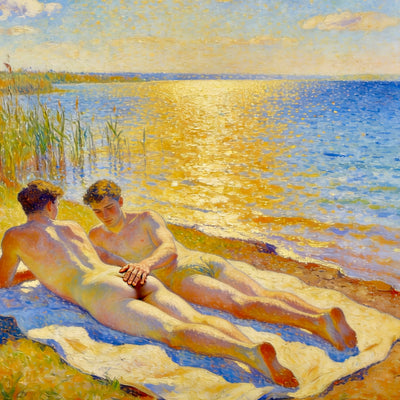
Robinson denounced the double standard: naked women on page 3 of the tabloid "Sun" were "wholesome", naked men "obscene". Gay eroticism was criminalized, while heterosexual eroticism was everywhere.
 Right here to our wall art
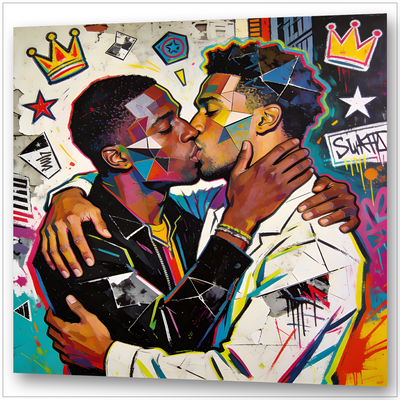
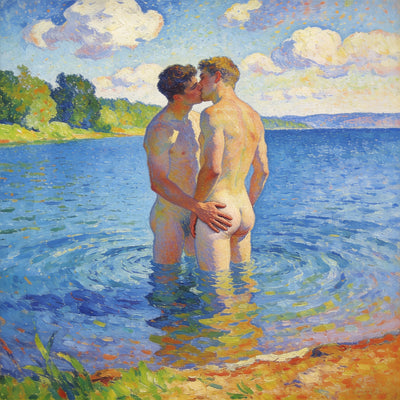
Today? The double standard remains. Heterosexual erotica is taken for granted in advertising, film, and art. Gay erotica is censored, flagged, marked as "inappropriate"—on social media, in galleries, in public. Two men kissing are seen as "conspicuous," while a heterosexual couple is "normal."
That’s exactly why KUNSTWERK BILDER exists. We make gay art visible—without apology, without shame. Because gay love, gay eroticism, and gay bodies should be just as natural as heterosexual ones.
Why "Glad to Be Gay" Is Still Important Today
Back then, that song set me free. It showed me: I’m not alone. I don’t have to hide. I can be proud.
And today? Today we still need this anthem. For every gay teenager wondering whether he is "normal." For every man who doesn't dare kiss his partner in public. For every queer person fighting censorship, discrimination, and violence. And also for every full-grown "bi man" who can't and doesn't want to suppress his passion for cocks.
“Glad to Be Gay” is not a nostalgic memory. It is a mandate.
Sing if you're glad to be gay. Sing if you're happy that way.